
Beauty in Nothing
Fallan
Words & Music: Michael Fallan
Date Written:
2026
AI Produced & Remastered:
Dec 2025
Song Lyrics:(on play)
Beauty in Nothing is a deeply introspective exploration of emotional abandonment, disillusionment and the painful collapse of expectations. Fallan opens with a confession of suffering, guilt and unanswered prayers, confronting the silence that follows a lifetime of searching for reassurance and redemption. The reference to Jesus introduces a spiritual dimension, questioning the promises of salvation and comfort when neither appears to arrive. Beneath the religious imagery lies a profoundly human question: what happens when the people, beliefs and promises we depend upon fail to give us what we need?
At the emotional centre of the song is the devastating simplicity of “I needed you to be good to me, you couldn’t be who I needed you to be.” These words carry the weight of a relationship defined not necessarily by an absence of love, but by an inability to provide the love that was needed. There is no elaborate accusation, only the recognition that someone’s limitations can leave lasting wounds in another. Fallan captures one of life’s most difficult truths: we can spend years waiting for someone to become the person we needed, only to discover that our healing cannot depend upon their transformation.
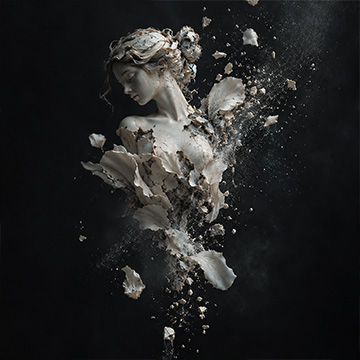
The post-chorus introduces a remarkable shift in perspective. “We’ll tear it down and jack it up” becomes an almost defiant declaration of emotional destruction and reconstruction. The desire to crush everything into dust suggests a willingness to dismantle not only a broken relationship but the expectations, memories and beliefs built around it. Against the backdrop of powerful, sorrowful music, the repeated phrase “There’s beauty in nothing” emerges as the song’s philosophical revelation. What initially sounds like despair gradually suggests something more complex: the possibility that emptiness is not simply an ending, but a release from everything that has caused suffering.
Ultimately, Beauty in Nothing explores the difficult relationship between hope and acceptance. Hope can sustain us, but it can also imprison us when we endlessly wait for something that will never arrive. By abandoning the expectation of rescue, whether emotional or spiritual, the narrator begins to confront the possibility of finding peace within himself. Fallan does not offer an easy resolution or a conventional message of redemption. Instead, he leaves us with a more challenging and profound idea: sometimes the greatest freedom comes not from finally receiving what we have spent our lives waiting for, but from discovering that we no longer need it.