
March in november
Fallan
Words & Music: Michael Fallan
Date Written:
1986
AI Produced & Remastered:
Dec 2025
Song Lyrics:(on play)
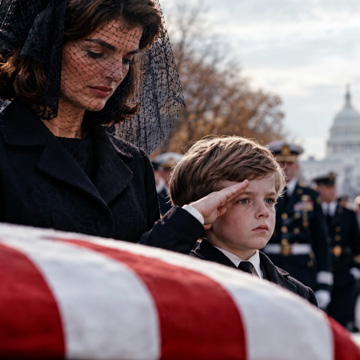
March in November is a haunting reflection on the assassination of John F. Kennedy, explored not through the politics of history but through the deeply human tragedy left behind. Fallan opens with the unforgettable image of Jacqueline Kennedy dressed in black, her face concealed behind a mourning veil. The narrator repeatedly freezes the moment, captivated by the beauty and sorrow of a woman whose private grief became part of the world’s collective memory. Beneath the historical significance, he discovers something profoundly personal: the vulnerability of a human being caught in a moment she can never escape.
The image of a young John F. Kennedy Jr. saluting his father’s coffin brings an extraordinary emotional weight to the song. “Too young to understand, his eyes are dry” captures the innocence of a child standing at the centre of an unimaginable tragedy, unable to comprehend the permanence of what has been lost. As the lyrics move beyond the funeral, Fallan confronts the darker consequences of political violence, where death becomes an instrument of power and individual lives are sacrificed to forces beyond their control. The contrast between public history and private suffering gives the song its emotional and philosophical depth.
Yet the most compelling aspect of March in November is its transformation from historical observation into something far more intimate. The narrator begins to identify so deeply with Jacqueline’s suffering that the boundaries between past and present seem to dissolve. “I wish that I was born before, I’d never let you go” expresses an impossible longing to reach backwards through time, not merely to witness history but to change it. There is something profoundly moving about this desire to protect someone we have never known, to imagine a different life for them, and to feel a connection that transcends generations.
Ultimately, March in November is a meditation on empathy, mortality and the unbearable permanence of the past. Its recurring refrain, “Look at the man, look at the dream, look at the life in you,” reminds us that behind every historical tragedy are lives that might have unfolded differently, dreams that might have been realised and love that might have endured. Fallan captures the extraordinary human capacity to grieve for strangers and mourn possibilities that never existed. History remembers the moment a life was taken. The human heart remembers everything that might have been.